

How the Insurance Companies Took Over the HMO Industry & the Raid on FHP International
An Enhanced Reconstruction of the Robert Gumbiner Monograph Cross-referenced and augmented from oral history, SEC filings, corporate histories, and contemporaneous press sources
by Gregg Anthony Masters, MPH**
Managing Director, Health Innovation Media | Executive Producer, Healthcare NOW Radio
Let me be direct: every policy conversation I’m having right now about ACOs, value-based care, and the so-called ‘transformation’ of American healthcare runs through a ghost – a Southern California physician who built something remarkable, watched it get strip-mined by a board and an investment banking culture that never understood what he’d built, and spent his final years putting the story on paper so we couldn’t pretend it didn’t happen.
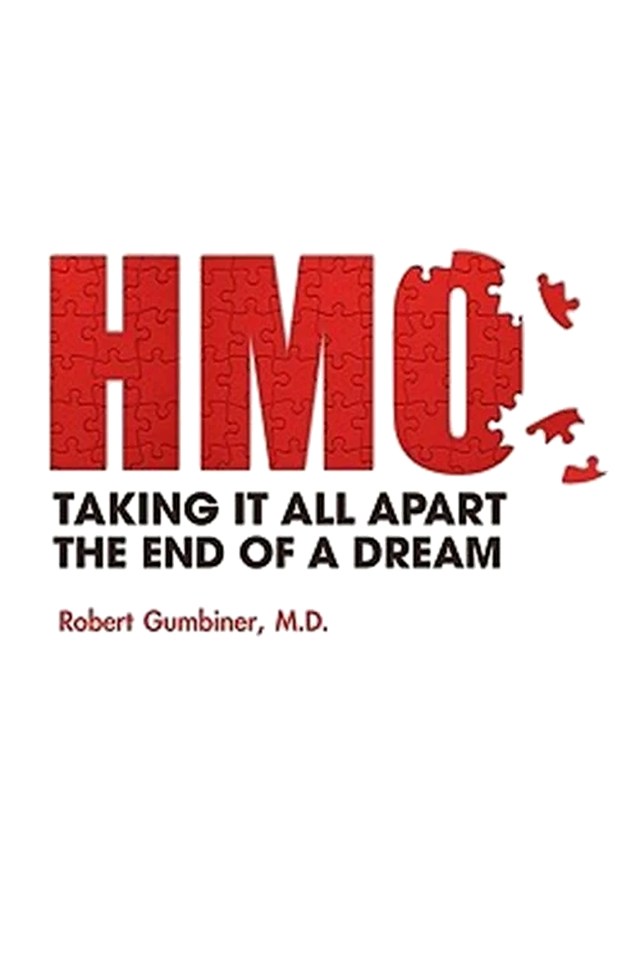
His name was Robert Gumbiner, MD. His creation was FHP International Corporation. And his posthumously published monograph – The HMO, Taking It All Apart: The End of a Dream (AuthorHouse, 2009) is one of the most important and least-read documents in the history of American managed care.
I’ve been a soldier in this space long enough to have watched the managed competition experiment arc from insurgent idea to institutional furniture to convenient villain. I mainstreamed HMOs and second-generation PPOs in California back when the AMA still treated prepaid group practice like a communicable disease. So when I say Gumbiner’s story is our story – the story of everyone who has ever believed that organized, prevention-focused, physician-led care could actually work – I’m not being romantic. I’m being precise.
Before HMO Was a Dirty Word
Long Beach, California. 1961.
Gumbiner had already run the arc that defined his generation’s most serious physician-thinkers: Indiana University MD (1948), migration west, a stint as an Air Force physician during Korea, which exposed him to the logic of population-based capitated care and then a decade in private practice at Plaza Medical Group with nine other physicians, during which he’d been quietly running a prepaid plan for their patients. He understood, at an almost molecular level, what fee-for-service medicine was doing to the doctor-patient relationship: it rewarded illness, not health. He called it “basically immoral,” because it meant doctors earn the most when patients are sickest.
So in 1961, he converted Plaza Medical Group into a nonprofit corporation, Family Health Program, with 2,000 enrolled members prepaying a flat monthly fee for comprehensive care delivered by employed physicians under one roof. This is what we now call the staff-model HMO. At the time, it was barely tolerated by organized medicine and invisible to most health policy observers.
By the end of the 1950s, Gumbiner recalled in the Orange County Business Journal, “there were only a few dozen HMOs around the country.” When he launched, the concept had a lineage, i.e., Kaiser’s industrial prepaid plans from the 1930s, the Group Health Association in DC, but it was emphatically not mainstream. It was, in fact, exactly the kind of structural insurgency (in today’s parlance ‘innovation’) that establishment, legacy or mainstream medicine and insurance industry incumbents were designed to suppress.
What Gumbiner built over the next two decades is, by any honest accounting, one of the great organizational achievements in American healthcare history:
- 1967: 10,000 members. Second Long Beach center.
- 1968: Third center, Fountain Valley, Orange County.
- 1969: Medicaid pilot launched, one of the first HMOs in the country to serve low-income beneficiaries, at a time when most of the industry thought Medicaid was financial poison.
- 1971: 30,000 members at the ten-year mark. Compton center added.
- 1973: Guam. Which tells you everything about his ambition and his eccentricity.
- 1977: Federal HMO qualification, opening eligibility for Medicare and Medicaid reimbursement.
- 1982: Medicare risk contract pioneer – Family Health received a federal demonstration contract to provide prepaid capitated care to seniors, assuming full actuarial risk that the patient’s care might exceed the flat fee. This is the model that became Medicare Advantage. Gumbiner’s shop essentially invented it for the West Coast.
- 1983: FHP Senior Plan launched. The company converted a Long Beach skating rink into a Senior Health Plan Center to handle the flood of new elderly members.
By 1991, the company’s 30th year, FHP was running 50 medical facilities, revenues had crossed $1 billion, and it served 640,000 members, roughly a third of them Medicare beneficiaries. As Gumbiner himself said, he had built 55 medical centers and four hospitals in nine states.
“Dr. Gumbiner was on the cutting edge of managed health care before other people knew how to spell it.” That was Charles Steller of the American Managed Care and Review Association, in the Los Angeles Times, 1990. And he was right. The problem, as Gumbiner would spend the rest of his life explaining, was what happened next.
The For-Profit Turn and the Beginning of the Unraveling
1985 is the year the story turns.
Gumbiner and 17 other FHP executives purchased the company from its charitable trust status and converted it to a for-profit corporation at $36 million. A competing California HMO, i.e., Maxicare (think ‘Window Project, HealthAmerica acquisition, etc.) had offered $50 million. Maxicare was defeated by adverse California court rulings. Gumbiner’s group got the deal at a $14 million discount.
I’ve thought about that gap for a long time. At the time, it looked like savvy maneuvering. In retrospect and this is the argument Gumbiner makes explicitly in his monograph and in the two-volume oral history he gave to UC Berkeley’s Bancroft Library in 1996, it was the opening through which a different set of institutional logics entered the organization. The IPO followed in July 1986 on NASDAQ. The board composition changed. Wall Street’s quarterly cadence became a structural fact of life. And the incentive architecture that had produced three decades of mission-driven growth began, slowly, to be reoriented around something else entirely – something I’ve referred to as the ‘HealthcareBorg‘ where all meaningful innovation goes to die via assimilation by the incumbents – which just might explain the hostility towards the entire for profit health insurance domain.
The IPA expansion accelerated during this period via more mainstream docs in Individual Practice Associations, networks of independent physicians contracted rather than employed. Faster to stand up than a new medical center, cheaper in capital terms, easierto scale across new geographies. Also, in Gumbiner’s view, a vector through which fee-for-service logic seeped back into what was supposed to be a capitated, prevention-focused enterprise. You cannot supervise the clinical behavior of 10,000 contracted independent physicians the way you can manage 200 employed ones. The model that made FHP FHP, i.e., an integrated, accountable, coherent ecosystem, began to diffuse.
In 1990, Gumbiner stepped back from day-to-day operations. The board was now running the company. Within months: a major malpractice jury award. A Medicare rate increase of only 1.4 percent. Federal scrutiny of FHP’s aggressive Medicare marketing in San Diego. The architecture was holding, but the foundation had shifted.
The Raid
August 5, 1996. PacifiCare Health Systems and FHP International Corporation announced a definitive agreement: PacifiCare would acquire FHP in a $2.1 billion transaction.
FHP at that moment served nearly 2 million HMO members in 11 states and Guam – commercial, governmental, and Medicare beneficiaries – across ambulatory care, hospital services, pharmacy, dental, vision, home health, skilled nursing, physical therapy, psychological counseling, and health education. The combined entity would serve almost 4 million members in 15 states with revenues exceeding $8.5 billion.
Consumer and physician groups urged state regulators to block it. The market concentration numbers were legitimately alarming: 47 percent of the Medicare HMO market in Los Angeles County, 66 percent in Orange County, 70 percent in San Diego County. The California Medical Association opposed it on efficiency grounds, the evidence that large-company mergers produce meaningful savings was thin then and it’s still thin now. The FTC investigated. The state AG investigated. Neither acted. The merger closed in early 1997.
And Gumbiner, who had built this thing across 35 years, who had invented the Medicare risk contract, who had created clinical infrastructure across nine states when managed care was barely a concept, was out.
He wrote a supplementary typescript in 1997, attached to his Bancroft Library oral history. The title is not subtle: “How the shareholders of FHP were defrauded of $400 million by their own board of directors and how that board of directors enriched themselves at the shareholders expense.” That document became the seed of The HMO, Taking It All Apart. Published the year he died. His final accounting.
What This Has to Do With Where We Are Right Now
I’m writing this for ACO Watch, which means my readers understand the through-line I’m about to draw. So let me draw it directly.
The organizational model Gumbiner built, i.e., prepaid, prevention-focused, fully integrated, actuarially disciplined, with employed physicians and owned facilities, is what every serious accountable care framework since 2010 has been trying to reconstruct, imperfectly, at scale, inside a payment system that was never designed to support it. The MSSP. ACO REACH. The forthcoming LEAD Model. They are all, in their distinct ways, attempts to reimpose Gumbiner’s original logic onto a fee-for-service chassis that keeps metabolizing the intervention and returning to equilibrium, ergo the assimilation phenomenon.
The fundamental misalignment he identified, i.e., a payment system that rewards illness management over health maintenance, has not been solved. It has been managed around, at the margins, with shared savings arrangements that generate meaningful but modest results. MSSP produced a record $2.4 billion in savings in 2024, and that’s real. It’s also modest relative to total Medicare spend, and the structural incentive failure underneath it is still compounding.
What Gumbiner’s story adds to that conversation is a specific and underappreciated caution: governance matters as much as model design. FHP didn’t fail because prepaid group practice was wrong. It was absorbed (assimilated then corrupted) because the governance structure, i.e., the board composition, the shareholder dynamics, the CEO succession, drifted away from the founding logic without anyone being able to stop it. The mission got managed out of the mission-driven organization.
So as Sachin Jain recently opined, it’s about leadership. Nope! It’s the ‘OG&E’ (organization. governance and equity) foundation. Every ACO, every value-based care arrangement, every innovative primary care model operating inside a larger health system is subject to exactly this risk. The same board dynamics, the same quarterly earnings pressure, the same management consulting ‘Beltway Bandit‘ logic, i.e., B Cubed where bullshit baffles brilliance, almost reflexively says consolidation creates efficiency, yada, yada, yah. These are the forces that ended FHP, and they are operating today with considerably more sophistication and regrettably due to our healthcare ‘leaders‘ failure to lead, with considerably less resistance or pushback.
The Third Career, and What It Tells Us
There’s a postscript to the Gumbiner story that I find both moving and instructive.
After FHP was absorbed in 1997, Gumbiner turned to a project he’d been incubating since his first trip to Latin America in the early 1960s: the Museum of Latin American Art (MOLAA) in Long Beach, the only museum in the United States dedicated exclusively to modern and contemporary Latin American and Latino art. He purchased a former skating rink (a building type he apparently had a gift for repurposing), connected it to a former silent-movie studio, and spent more than $40 million over a decade building something remarkable. At his death in January 2009, he bequeathed over $50 million to MOLAA and the Robert Gumbiner Foundation.
He also funded the Ethnic Art Institute of Micronesia on the island of Yap. Of course he did.
Here’s what I take from the third career: Gumbiner was constitutionally a builder. He built 55 medical centers and four hospitals in nine states in his second career and then turned around and built a world-class art museum in his third. What he could not build, in the end, was an institutional structure durable enough to outlast the forces that came for it once the company went public and the governance shifted.
That is the cautionary lesson that belongs in every conversation about ACO governance, value-based model sustainability, and what happens to mission-driven organizations when they intersect with capital markets.
The dream was right. The architecture was real. The board got captured. And a $2.1 billion transaction later, it was over. Sound familiar (think the current dangerous to global and U.S> public health Charlatan at HHS and his unfit to lead minions at the commanding heights of our public health infrastructure.
The HMO, Taking It All Apart is available through Internet Archive and worth every hour it takes to read. Gumbiner earned the right to be bitter. He chose, instead, to be specific and to leave the record straight.
We should be paying attention.
==##==
** ** AI Use & Editorial Standards Disclosure. In producing this content, the author employed AI language tools in a defined supporting role: (1) Research aggregation: surfacing relevant source material and authoritative references across peer-reviewed, institutional, the arts and journalistic databases; (2) Structural organization: proposing content architecture and draft sequencing; (3) Draft suggestion: generating candidate language for author review. The author retains sole editorial responsibility for all published content. Every citation is independently confirmed as accurate and accessible prior to publication. No headlines, pull quotes, or factual claims are published without author verification. AI-generated language is treated as raw material then recast entirely in the author’s established voice and subject-matter expertise before any content reaches publication. This workflow reflects the author’s commitment to the standard that AI serve, not replace the author.

