
By Gregg Anthony Masters, MPH **, Founder & Managing Director, Health Innovation Media
There is a moment in every clinician’s training when someone has to decide: is this my patient?
On a special episode of Health Unabashed, my former co-host. author and digital health thought leader Gil Bashe and I spent thirty minutes inside that question, because on the night my son Anthony left us, I watched, in real time, a hospital full of capable people each conclude, one after another, that the answer was no.
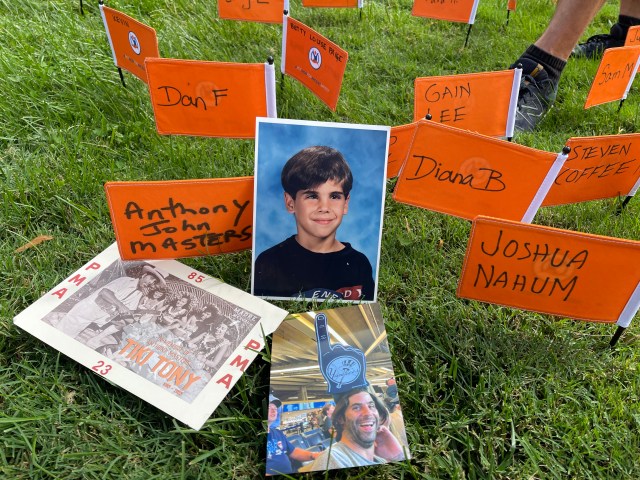
Anthony John Masters was 38, a creative director in the spirits business, when he fell off his bicycle on a Brooklyn street in the early hours of June 4, 2023. He wasn’t wearing a helmet. He hit the pavement, hard, on the left side of his head and temporarily lost consciousness. Dash-cam footage from an unrelated passing car – pure chance, shows the moment. It’s too grainy to say definitively whether he veered into or a pedestrian stepped into his path. What isn’t ambiguous is what the fall did to him, i.e., a fractured skull, bilateral frontal contusions, and a left parietal epidural hematoma. EMS (Emergency Medical Services) took Anthony to a Level I designated trauma center and teaching affiliate of a nameplate school of medicine, precisely the kind of set, setting and designation that’s supposed to mean something from a public trust point of view. I believed Anthony would be cared for by trauma competent and trauma informed staff and relied on its public facing representations that Anthony was in the right setting for his condition.
The Story
I got the “Gregg, Anthony is in the ICU” call at 7 a.m. that Sunday, was on a “red eye” (San Diego to New York City) that night, and at Anthony’s bedside Monday morning. The chief of service, a faculty attending, either neurosurgeon or a neuro-intensivist, I wasn’t clear which, but assumed the title matters less than what he said; walked me through it plainly: Anthony experienced a serious head injury, he told me. He expected “six-to-seven-day length of stay”, plus possible rehab support for memory and/or speech depending on his rate of recovery. For the next several days, that’s roughly what I watched unfold. As I approached bedside in the ICU, Anthony was groggy, combative with his monitoring leads the way head-injury patients often are, medicated for seizure prevention and swelling. But each day his personality came back a little more. He was flirting with his nurses. He was asking his girlfriend Lauren to lie next to him. I was at his bedside ten to twelve hours a day, and by any measure I had at the time, the system was working.
Then came Friday.
I want to be careful here, because this is the part of the story where a father’s account and a hospital’s clinical record are not always going to line up word for word, and I think that gap is part of the story itself.
What I observed: Anthony was groggier than usual that morning:
“Dad, I’m high, weeeeee!”
he told me and through the day he drifted from groggy to listless to unresponsive. His breathing changed. I know what belly-breathing against an obstructed airway looks like now; I didn’t want to know it then. His numbers were moving in the wrong direction: a resting heart rate that lived in the 50s and 60s for an otherwise fit 38-year-old spiking, his oxygen saturation dropping toward the high 70s.
I asked a (presumed) resident who walked into the room to identify herself; not her name; her credentials. First year? Third? Chief resident? “I’m part of the care team” was the answer. That’s not an indictment of one young physician standing in a doorway; it’s a description of a system where, in the moment that mattered most, nobody in the room could tell me who was actually in charge of my son’s care.
So, I did the thing every hospital tells families to do and hopes they won’t have to: I went to the nursing station and asked to speak to the nursing unit ‘manager’. I was told, there wasn’t one; i.e., it was a weekend night (Friday). I described Anthony’s situation and asked the supervising nurse to summon the ‘on call’ attending (AOD) intensivist. I sat and listened while she cycled through names on the list. The first call; not actually on call. The second attempt reached the presumptive AOD, which I am not sure whether it was neurosurgeon or critical care intensivist, who told her, in substance, that it was 10 o’clock, he wasn’t on-site, and what was the nursing supervisor described sounded more like a neurosurgical event – paraphrased from recall of overheard conversation. That was the end of that conversation.
I left the encounter feeling competely defeated.
Afterall, I reasoned, I am not the average person or caregiver at bedside. In a prior life I ran external affairs for a Southern California AMC, with liaison responsibility for teaching hospital agreements, am also intimately familiar with ‘structural’ incentives including workflows, operating culture including the potential role of ‘implicit bias’ in the NMP determination. If I can’t successfully advocate for Anthony at bedside, you know the health IT promise of the “right care, at the right time for the right patient” mantra, what are the prospects that average family member, or loved one can?
We, the general public, must trust that we’re ‘in good hands’ (i.e., trained, competent, alert trauma informed staff) of our cathedrals of medicine; and in my view subject to an aggregate yet distributed public trust accountability framework, including the web of state licensure, the American College of Surgeons validation of Level I trauma center designation, the Joint Commission accreditation standards, the Accreditation Council on Graduate Medical Education (ACGME), and Medicare and Medicaid ‘conditions of participation’, to name some of the principal actors.
Anthony’s condition deteriorated over the next few hours. My understanding was a ‘code’ was called and the ‘rapid response team‘ (RRT) summoned. When the response finally arrived at bedside, it wasn’t RRT. By my count somewhere between eight to eleven people cycled through the room. It felt chaotic. Most seemed in observational mode with no discernible ‘quarterback’ directing the team. I was asked to leave the room due to my ‘disruptive presence’. I retreated to the hallway, when approached by the nursing supervisor who said: “if you believe in prayer, now would be a good time” (paraphrased) – not very re-assuring.
Shortly thereafter a physician (unsure whether faculty attending, or resident) either an anesthesiologist or possibly an internist approached me in the hallway, and I was briefed then asked to approve Anthony’s intubation. I was stunned, confused, fearful and alone in making this seemingly critical life or death situation. As far as I could tell, there were no AOD’s in the room, whether from neurotrauma or more specifically the critical care intensivist requested. Only in retrospect did I learn that while the ‘Rapid Response Team’ (RRT) or ‘system’ were called, none were in-house during Anthony’s health status change.
This is the NMP problem, and it has a name in literature. In The Not-My-Problem Problem, NEJM correspondent Dr. Lisa Rosenbaum examines exactly this dynamic: the “bystander effect” in medical teams, where inaction isn’t malice, it’s diffusion.
Everyone assumes someone else has it. As the author of ‘Fragmentated: A Doctor’s Quest to Piece Together American Healthcare’ opined during a prior interview: “there are no bad actors here, only victims”. I’d been drafting a blog post about that very essay before any of this happened; I had no idea I was about to live inside a case study in real time.
Here’s where I’ll push past the personal into the structural aspects of this potential diffusion of accountability and responsibility, as it presents a unique challenge for hospital leadership. For example, how the distributed tapestry of ACGME (accreditation council on graduate medical education) programs, the Joint Commission accreditation, NYC Health Department licensure, the American College of Surgeons as validator for Level I Trauma Center, eligibility, conditions of participation for both Medicare and Medicaid programs are harmonized by hospitals or their health system boards.
Leadership must understand, orchestrate and support the interaction of these elements to assure they come together in the interest of public health, harm reduction and patient safety.
Rapid Response Teams are not new, and they are not optional in any meaningful sense. The Institute for Healthcare Improvement built them into its 2004 “100,000 Lives Campaign” for exactly one reason; i.e., patients on general floors deteriorate with warning signs hours before a cardiac or respiratory arrest, and a dedicated team that can be at the bedside in minutes measurably reduces death. That’s not a controversial claim in patient safety circles; it’s foundational. Whatever did or didn’t happen with rapid response availability that night, the standard it’s measured against is not ambiguous.
On-call coverage has a floor, too. Under EMTALA, hospitals are required to keep an on-call list of named physicians: not physician groups, individuals; and CMS’s own interpretive guidance says plainly that the on-call physician “must come to the hospital when called.” I’ll say directly: EMTALA’s on-call mandate is written around the emergency department encounter, and Anthony was five days into an inpatient admission, not in the ED, when that call was made. I’m not going to claim EMTALA relevance, which I can’t support. But the norm EMTALA codifies; i.e., a hospital’s on-call obligation runs to a named physician who shows up, not a phone opinion about whether something sounds critical or neurosurgical enough, is exactly the standard this moment should be measured against – whatever the precise regulatory mechanism turns out to be.
And resident supervision has an accreditation standard that doesn’t get ‘to take’ weekends ‘off’. ACGME’s Common Program Requirements call for an identifiable, appropriately credentialed attending, reachable by the whole care team, with supervision that scales up with acuity and risk, not down because it’s late and the attending isn’t on the hospital campus.
Level I trauma designation carries a specific, numeric standard for exactly this scenario. The American College of Surgeons (ACS), the body that verifies Level I status: requires neurosurgical evaluation at the patient’s actual bedside within 30 minutes of being requested, for a severe traumatic brain injury with CT evidence of intracranial trauma, or a moderate one with CT evidence of a potential mass lesion. That evaluation can be done by a resident or a PA; the standard explicitly allows that; but only, in the College’s own language, “as long as there is documented communication with the neurosurgery attending.” Thirty minutes, bedside, with documented attending involvement, is the bar hospitals’ carry by virtue of the designation held.
There’s a quieter thread in this story that I think matters as much as the crisis itself. For five days, I was functionally part of the care team, and nobody asked me to be. Every shift change brought a new nurse, and periodically a new physician assistant serving as the liaison to the neurotrauma service; i.e., each one, as best I could tell, re-reading the chart to get oriented rather than hearing it from someone who’d actually watched Anthony’s last 24 – 48 hours. Gil put his finger on it directly in our conversation: was the system working for the staff, for me, for Anthony? My answer was no. Not because anyone was unkind or unskilled, but because the continuity function, i.e., the person who holds the whole picture of a patient across a week of rotating faces, had quietly become me and to a lesser degree Anthony’s girlfriend. That’s not a complaint about any single handoff. It’s a description of what team-based care looks like when the team itself doesn’t have a fixed point of accountability, which is exactly the structural condition Dr. Rosenbaum’s NEJM piece describes, i.e., not one person failing, but a group each rationally assuming someone else has the full picture.
I want to say something else plainly, because I think it’s the harder and more useful point: this is not, in my view, a story about bad individual clinicians. Every nurse, resident, and PA I dealt with over those days was doing their job as their job was structured for them to do it. The resident who couldn’t tell me her role wasn’t hiding something; she may genuinely not have had standing to act. The nursing supervisor working the on-call list did exactly what she was supposed to do, twice, and got two answers that left my son without a decision-maker in the room. That’s not a story about individual failure. That’s a story about a system, about what happens when a hospital’s tripartite mission of teaching, research, and patient care can get ‘structurally’ out of balance, and the academic literature on this is not shy about naming the tension; i.e., clinicians at teaching hospitals report, in their own words, that patient care is sometimes treated as subordinate to the education and research missions it’s supposed to support.
I’ll add one more thread, and I want to be honest about its status, i.e., it’s a lead, not a finding. Ten days before Anthony’s admission, roughly 150 to 170 resident physicians walked out in New York City’s first physician strike since 1990, over pay-parity with their counterparts at the medical school. The parent hospital system had to pull in coverage from other facilities to keep the doors open. I don’t have anything that draws a straight line from that strike to the specific gap in coverage the night Anthony crashed. But when an institution has just come through a historic disruption to its physician staffing model, and ten days later a family is told there’s no attending, no manager, and no rapid response team in-house, that’s a question the hospital owes an answer to, not a coincidence to wave away.
Anthony was engaged and planning to be married. He was a free spirit who loved to be in community with others, the water, skateboarding, cooking for his friends, and for reasons that have nothing to do with any of the above, he never got to walk out of that hospital. I’m not telling this story because I think anyone in that building woke up that morning intending to do harm. I’m telling it because the “not my patient, not my problem” is a culture, not a person, and cultures only change when the people who benefit from the status quo have to look directly at what it costs.
If this story changes one hospital’s escalation policy, one program’s supervision schedule, one nurse’s confidence that she can insist on a name and a face in the room; that’s the only ending I know how to make out of this.
I’ve spent my career on the other side of this microphone, producing conversations with health system executives about patient-centered care, ‘real’ accountable care (beyond regulatory compliance that meets the patient’s needs in real time), and value-based payment; the language our industry uses to describe a system organized around the patient. I believe in that language. I also now know, from the inside, exactly how far a well-designed policy can sit from the actual room where a patient is dying at 2 a.m. on a weekend, when the people with the authority to act are on the other end of a phone line asking whether this is really their problem. Closing that distance, between the policy and the room, is the only meaningful accountability metric I care about now.
==##==
** AI Use & Editorial Standards Disclosure. In producing this content, the author employed AI tools in a defined supporting role: (1) Research aggregation: surfacing relevant source material and authoritative references across peer-reviewed, institutional, and journalistic databases; (2) Structural organization: proposing content architecture and draft sequencing; (3) Draft suggestion: generating candidate language for author review. The author retains sole editorial responsibility for all published content. Every citation is independently confirmed as accurate and accessible prior to publication. No headlines, pull quotes, or factual claims are published without author verification. AI-generated language is treated as raw material then recast entirely in the author’s established voice and subject-matter expertise before any content reaches publication. This workflow reflects the author’s commitment to the standard that AI serve, not replace the author.

