Transformational Potential of Medicare ACOs – Part 1


Dr. David Ballard, Chief Quality Officer and Senior Vice President at the Baylor Health Care System in Dallas, TX and Executive Director of its Institute for Health Care Research and Improvement, introduces a series of articles appearing in the August 2012 issue of Mayo Clinic Proceedings where he shares a 3-part interview with 3 leading health care experts, Drs Shulkin, Couch, and Haydar, who are involved with Accountable Care Organizations (ACOs). They discuss how and why the Medicare ACO funding options work or don’t work for their respective institutions. For ‘The Potential of Medicare Accountable Care Organizations to Transform the American Health Care Marketplace: Rhetoric and Reality‘, click here.

Yes We Can? No, He [POTUS] Didn’t. Not Tonight.

Note: An Opinion Piece By Gregg A. Masters, MPH

If you were not dialed into the first presidential debate tonight, you missed a rather tortured, poorly moderated, POTUS failed series of opportunities to credibly discredit his health reform ‘etch-a-sketch’ opponent. In the post debate punditry, and fact checking, this one is likely to ascend to the Romney ‘distortion zone’ hall of fame collection.

Going into the debate, odds makers favored POTUS to win the match, while most assumed his challenger would benefit though not land anything remotely resembling exchange parity if not the ‘out of the money’ and long shot knock out punch. In fact many saw this debate as an opportunity for POTUS to land just such a fatal blow to this master of health policy obfuscation.

Yet the results are in, and the sentiment is perhaps best be summarized by a series of tweets proffered by Atul Gawande, MD, aka @atul_gawande:

@Atul_Gawande 1. Obama was meandering and confusing.

@Atul_Gawande 2. Romney made a shockingly better case for government being a protector of the weak and vulnerable than Obama.

@Atul_Gawande 3. Romney’s stated policies—cutting coverage for the uninsured, Wall St regulations, and top tax bracket—weaken those protections.

@Atul_Gawande 4. That Obama could not convincingly explain this is utterly depressing.

@Atul_Gawande 5. The key policy Q: did Romney’s promise to leave the tax share of the rich the same walk back his promise to cut top tax bracket?

No doubt a wake-up call to the Obama camp.

In the attribution department, the title for this post ‘ Yes we can? No, he didn’t. Not tonight.‘ was sourced from: Warren Kinsella, aka @kinsellawarren, who described himself as ‘…a raconteur, bon vivant, and – occasionally – a Toronto-based lawyer, author and consultant. He is not profound, but he enjoys a good scrap.’

William J. DeMarco on Provider Contracting, ACOs, Value Based Purchasing, and Practice Acquisition

By Gregg A. Masters, MPH

Courtesy of Clive Riddle and MCOL aka @M_C_O_L, author, consultant and long term managed care industry verteran reflects on the ACO environment, unbundles and expounds on the range of entrants in the ACO space and reports on the status of the playing field as of the May 2012 data point.

For a recent chat with DeMarco, on ‘This Week in Accountable Care’ click here.

ACOs in the ‘Good Ole US of A’

By Gregg A. Masters, MPH

David Blumenthal, M.D., MPP, Former National Coordinator (2009-2011) Office of the National Coordinator for Health Information Technology and seasoned health policy wonk opines on ACOs. Further details and balance of Dr. Blumenthal’s credentials below:

In this video, Dr David Blumenthal, Samuel O. Thier Professor of Medicine and Professor of Health Care Policy at Massachusetts General Hospital/Partners HealthCare System and Harvard Medical School, talks to Nuffield Trust Director Dr Jennifer Dixon about one aspect of health care reform in the United States — the development of accountable care organisations (ACOs).

Dr Blumenthal provides an overview of this core part of the US health reform legislation which will see ACOs — networks of providers — assume responsibility for the quality and cost of care for their patients. He explains how financial incentives and accountability mechanisms will be introduced to help increase the efficiency of care and improve quality, and outlines the measures being taken to ensure that the amount of risk ACOs take on will be calculated appropriately.

Dr Blumenthal presented at the Commonwealth Fund and Nuffield Trust 12th international meeting on the quality of health care in July 2011.

Video and description originally posted by http://www.nuffieldtrust.org.uk

J.D. Kleinke Makes It Perfectly Clear!

By Gregg A. Masters, MPH

Amidst the relentless noise, fear mongering, hand wringing and incessant misrepresentation of both the legislative history as well as decades of development of sensible health policy context for competing models of managed competition or healthcare market reform, J.D. Kleinke in a recent New York Times Opinion piece titled ‘The Conservative Case for Obamacare‘ essentially clears the air once and for all.

If you have not read his piece, I strongly encourage you to do so!

For those of you without the time to scan right now, let me cite two key observations. But first, please be mindful that J.D. Kleinke is a resident fellow at the American Enterprise Institute, a former health care executive and the author of the novel “Catching Babies”, and not some fringe liberal dwelling in a pseudo think tank pumping ideological fuel into the health reform disinformation rant. J.D. notes:

The core drivers of the health care act are market principles formulated by conservative economists, designed to correct structural flaws in our health insurance system — principles originally embraced by Republicans as a market alternative to the Clinton plan in the early 1990s. The president’s program extends the current health care system — mostly employer-based coverage, administered by commercial health insurers, with care delivered by fee-for-service doctors and hospitals — by removing the biggest obstacles to that system’s functioning like a competitive marketplace.

So much for the ‘Government takeover’ enshrined in Republican town hall talking points designed to to stir the pot and focus grandma’s attention on the inevitable death panels in her future.

J.D. further observes the likely source of the vigorous opposition to the Heritage Foundation inspired ‘individual mandate’ included in the Patient Protection and Affordable Care Act aka ‘Obamacare’, as a market driven alternative to the Clinton administration’s ‘American Health Security Act of 1993, aka ‘HillaryCare’:

In the partisan war sparked by the 2008 election, Republicans conveniently forgot that this was something many of them had supported for years. The only thing wrong with the mandate? Mr. Obama also thought it was a good idea.

All I can say is ‘thanks J.D.’. I now wonder whether Matt Holt was projecting on your future when he tweeted:

Matthew Holt ‏@boltyboy
JD Kleinke’s resignation letter from AEI

Physicians, ACOs and Those ‘Boiler Plate’ Participation Agreements: Buyer Beware!

By Jeffrey L. Cohen, Esq.

There continues to be terrific interest in accountable care organizations (ACOs), which are of course a financially risk-based model of providing healthcare to patients who choose to enroll in the Medicare Shared Risk Program. ACO organizations are often led by hospitals and hospital systems, though occasionally by physician organizations. One of the key common threads among these provider led ACOs is the fear of being left out of “the game,” the fear of losing out financially. This fear, however, can lead physicians to run headlong into danger if and when they sign ACO documents.

One of the key ways ACOs get formed involves a stack of contracts being created, then shoved under physicians’ noses. Doctors afraid to lose out tend to just sign. The organizations are really to blame here, when the documents fail to contain material terms to deal with things like: credentialing criteria, disciplinary procedures, financial provisions, how the financial up side or down side can affect physician compensation. The documents are simply slid under their noses and, in fear of being left out, they get signed! Or, as my buddy Rodger says “Ready, shoot, aim.”

Regardless of a doctor’s view of ACOs, no document ought to be signed unless all the questions raised by them are addressed, very clearly and in writing. Be at the table with ACO organizers and do your best to design a good system, but don’t be naïve to think that the unaddressed portions will magically get filled in somehow in a way that benefits you or that even makes sense. At the very least, wait until the document is complete, then consider if you want to sign it.

Jeffrey L. Cohen, Esq. is the founder of the Florida Healthcare Law Firm. Follow him on Twitter via @FLhealthlawfirm. This article originally appeared here.

I’m Absolutely Bullish on the Future of Healthcare!

By Gregg A. Masters, MPH

In the walk and perhaps some instances trot towards forming and launching an ACO you have prominent voices on both sides of the debate. The bearish camp is perhaps best represented by the likes Jeff Goldsmith in ‘Can Accountable-Care Organizations Improve Health Care While Reducing Costs?’ or Virgina Herzlinger in ‘Herzlinger Predicts ACOs, PCMHs Will Fail‘.

While the bullish camp advocates include Donald Berwick, MD in ‘Making Good on ACOs’ Promise — The Final Rule for the Medicare Shared Savings Program‘, Drs. Elliott Fisher and Mark McCllelan, see ‘Fostering Accountable Health Care: Moving Forward In Medicare‘. Now add to the bullish view and in no uncertain terms, that of Charles Saunders, MD, President of Strategic Diversification for Aetna.

I had the good fortune to chat (to listen, click on show image to the right) with Dr. Saunders today to gain additional insight into how one rather progressive and forward thinking ‘payor’ views their interest in the ACO and Patient Centered Medical Home market, while actively re-tooling its traditional health plan business model.

Healthcare consultant and author Joe Flower recently opined ‘Even Aetna CEO admits: We’re toast‘ while noting Mark T. Bertolini aka @mtbert, proffered the following sober reckoning on the demise of the traditional health insurance business model:

The system doesn’t work, it’s broke today. The end of insurance companies, the way we’ve run the business in the past, is here.

What Bertolini sees under the auspices of the Affordable Care Act and the ACO provisions specifically are minimally transitional if not replacement vehicles to the health plan business model. A reinvented Aetna (if not entire AHIP membership) will have a lot to do with technology and a range of value added roles Aetna can play in building and supporting the drivers of sustainable healthcare ecosystems. We’ve got to get beyond simplistic notions of ‘my revenues are your expenses’, and see our collective interests in a collaborative vs. competitive future.

The visionary on point to assemble, configure if not birth the moving parts of this future is Dr. Charles Saunders. We got some of his worldview today on ‘This Week in Accountable Care.’

In the words of a very smart man, from many years ago:

No one is big enough to be independent of others – Dr. William Worrall Mayo

Perhaps we’ll pay attention this time?

Medicare Shared Savings Program & Advance Payment Model Application Process

By Gregg A. Masters, MPH

Per recent CMS Provider Call:

From a CMS ‘National Provider Call’ on July 31, 2012, this is a walk through of the Medicare Shared Savings Program and Advance Payment Model Application Process. The review includes both an overview, and update specific to the two distinct programs. A Q&A session follows the presentations.

CMS accepts comments, here. As well as via the HHS Privacy Policy, here.

ACO Explosion

By Gregg A. Masters, MPH

On ‘This Week in Accountable Care‘, Wednesday, September 5th, 2012 at noon Pacific and 3PM Eastern, my special guest is industry veteran William J. DeMarco, President and CEO of Pendulum Health.
Active since the roll-out of the HMO Act, and instrumental in the development of marquee names and properties in the managed healthcare market, including United Health Group and others, DeMarco remains one of the clearer and thoughtful voices in the healthcare policy and implementation dance.

This is DeMarco’s second appearance on This Week in Accountable Care, for some of his previous thoughts, click here.

In anticipation of our chat, DeMarco provided a draft release of Pendulum Health’s September Newsletter intended as both a client update and general industry developments tracking piece. We are privileged to include portions of that release below. The stats speak for themselves and are nothing short of remarkable and historically unprecedented. I will summarize and provide context via the Tweets posted this morning in anticipation of our chat and invite your to read the balance of DeMarco’s update in its entirety:

@2healthguru We’ll discuss key developments on the demand side of ACO development & launch with DeMarco at noon PT

@2healthguru: Whoa! ‘Over 400 applications for new ACOs are in process’ given 9.6.12 deadline. According to William J. DeMarco

@2healthguru ‘Most [are] physician owned medical groups, while several are IPAs’ DeMarco

@2healthguru: ‘…a 600% growth rate in ACOs since November of last year…’ DeMarco

@2healthguru: ‘….20% of Medicare beneficiaries…will be connected to Medicare through their ACO by 1.1.13..’ DeMarco

@2healthguru: ‘[add] Medicare Advantage beneficiaries [27%]…a factual statement…[ACO share will approach] 50% of Medicare population.’

@2healthguru: ummm, lemme see. 50% share shift since [delayed] launch in 2012. Am I really smart to sit on sidelines?

The complete newsletter entry detailing the basis for the ‘ACO Explosion’ headline is posted below:

Medicare Shared Savings

Feasibility studies for three ACOs in North Carolina, a medical group in Arizona, a physician alliance in Illinois, a hospital system in Indiana and consultation with several Pioneer Plans has kept us very busy over the last several months. Most of these are physician owned medical groups, while several are IPAs with medical homes who want to collaborate with one another to form the primary care base of a Medicare Shared Savings ACO.

Over 400 applications for new ACOs are in process and due to CMS by September 6th. Add to this the several hundred earlier ACOs approved in April and June of this year and it becomes clear that the 600% growth rate in ACOs since November of last year when final rules were published brings excitement to the marketplace.

This easily represents 20% of Medicare beneficiaries who will be connected to Medicare through their ACO by January 1, 2013. When adding the Medicare Advantage beneficiaries that represent 27% of the Medicare population and growing, it is a factual statement to say that 50% of all Medicare beneficiaries will be receiving their benefits through Medicare contractors instead of Medicare directly. These contractors are all being held accountable by CMS to follow stringent guidelines including patient satisfaction.

This means Medicare has been permanently changed by focusing on shares savings for improving quality instead of merely paying claims. We anticipate ACO mergers and acquisitions will be the next step as investors and hospitals catch up to the opportunity to invest in the new chronic care business model.

We are excited for the plans with whom we have worked, and their enthusiasm and innovation encourages us to expand our own resources and capabilities to serve this emerging transformation of the local delivery system.

William J. DeMarco MA CMC is the President & Chief Executive Officer of Pendulum Health Development Corporation., a national, independent healthcare consulting firm specializing in healthcare delivery system redesign and transformation. For more information, click here.

ACO Roundup | August 29th 2012

By Gregg A. Masters, MPH

We’ve been somewhat dormant on ‘This Week in Accountable Care‘ during the summer months, but there has been no shortage of announcements with the CMS series of proscribed deadlines, as well as the purely discretionary dates associated with ACO arrangements negotiated and launched in the private aka ‘commercial’ market.

Today we touch on some of those headlines during the show including:

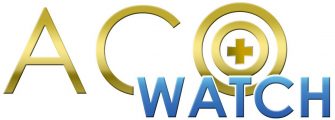
Sign Of Change: Doctors Offering Price Guarantee To Insurers by Bruce Japsen on Forbes.

I appreciate Bruce’s reporting, but this is neither novel nor surprising component of the Affordable Care Act. We know what works, and while the Act is a rather lengthy and complex document to read (lets be real perhaps 1/2 or 1% have actually read the entire document, most of us relied upon analysts and client briefings to digest the many moving parts of the Affordable Care Act), few of us actually connect the dots between seemingly unrelated program elements.

Take for example, Geisinger’s ProvenCare, and as further detailed in ProvenCare: A Provider-Driven Pay-for-Performance Program for Acute Episodic, as just one example of arrangements preceding the passage of the Affordable Care Act.

While Bruce notes:

In what could be a surprising and growing trend, one of the Midwest’s largest providers of medical care is bringing a price guarantee to a new concept being pushed by the Obama administration that rewards doctors and hospitals for working together to improve quality.

ProvenCare went live in February 2006, and was preceded by considerable real world practice, over decades of bundled and fixed rate pricing techniques for both hospital and physician services.

It only seems new and different through the lens of recent health reform initiatives and specifically the details of implementing the Affordable Care Act. In the world of managed care contracting, bundled or packaged pricing reached back into the 1980s.

Another article that caught my attention was addressed in a prior post on this blog titled:
Hospitals Back in Insurance Biz: Good News or Bad News?

The question was originally posed on KHNews and written almost from the point of view that omitted considerable experience of the prior entry of the hospital industry in the insurance business.

Again, lets not forget the institutional memory that does exist in the blogosphere and give both credit and context where due and appropriate.

For some levity following the KHnews piece, checkout Vince Kuraitis aka @vincekuraitis on The Healthcare Blog, titled: Hospitals…Thinking About Getting Into Health Insurance? 6 Reasons To Lie Down Until the Urge Goes Away.

Finally, the last piece I will mention is titled: 8 Accountable Care Organizations Worth Closer Look. The entities in this article are worth a follow.