‘Pioneers Take Arrows While Settlers’ Get the Land?’

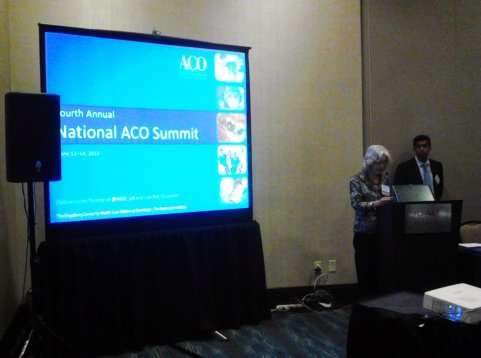
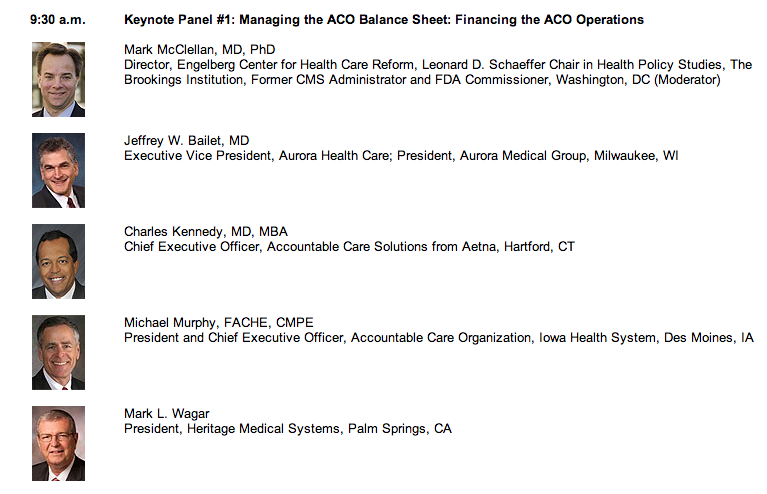
At the ACO Summit in Washington DC in June 2012 Elliott Fisher, MD arguably one of the admitted father’s of the ACO movement opined perhaps prophetically from a panel including Mark McClellan, MD and former Health Affairs Editor, now RWJF Senior Health Policy Advisor Susan Dentzer the above wisdom.Richard Gilfillan MD

Today, CMS via the Center for Medicare and Medicaid Innovation (CMMI) released their eagerly anticipated results for the Pioneer class, i.e., that risk savvy group of participants most likely to make the accountable care vision work. Unfortunately as was the case in the predecessor Physician Group Practice (PGP) demonstration sample, the results where well ‘mixed’ with several exiting the program entirely while other’s chose to default to the ‘tamer’ Medicare Shared Savings Program.

According to Modern Physician:

Seven Medicare Pioneer accountable care organizations that didn’t produce savings in the first year of the Obama administration’s most ambitious test of the accountable care model have told the CMS they will leave the Pioneer program and enter the Medicare Shared Savings Program model, while another two participants have indicated they will leave Medicare accountable care entirely, the federal agency announced Tuesday.

The American Medical Group Association (AMGA) also released the following statement:

…regarding the announcement from the Centers for Medicare & Medicaid Services (CMS) on first-year results from the Center for Medicare and Medicaid Innovation’s Pioneer ACO Program (25 of the 32 health systems in the program are AMGA members):

“AMGA member groups are in the forefront of transforming the nation’s healthcare delivery system to achieve coordinated, affordable, high-quality care. AMGA is always proud to highlight the groundbreaking and innovative steps our members have taken, and continue to take, in order to improve the quality of our nation’s healthcare system, but today we are particularly pleased to congratulate members in the Pioneer ACO program for improving patient care and in some cases lowering the cost of care. All of these groups are to be applauded for their leap of faith and their continued dedication to advancing the role of high-performing health systems in America. ”

As with any ambitious effort of this scale, the movement to value-based, accountable, coordinated care for patients is an evolutionary process. Programs like ACO initiatives will take many years to mature, especially because they are creating and testing new models for payment and care delivery. AMGA is encouraged by the achievements of the Pioneer ACO participants in the first year of the program. We also pledge our continued support of our members that are committed to promoting better health care at lower costs in the Pioneer ACO and Medicare Shared Savings programs. ”

Many AMGA medical groups, and in particular the ACO Pioneers, are laying the foundation for future programs and innovative payment arrangements. These medical groups will continue to invest in improvements in care processes and infrastructure that will provide patients with better health outcomes, enhanced care experience, and lower costs well into the future. AMGA commends all of our members who have undertaken this journey. – Donald W. Fisher, Ph.D., CAE, AMGA President and Chief Executive Officer

The CMMI announcement reads in part as follows:

Today, the Centers for Medicare & Medicaid Services (CMS) announced positive and promising results from the first performance year of the Pioneer Accountable Care Organization (ACO) Model, including both higher quality care and lower Medicare expenditures. Made possible by the Affordable Care Act, the Pioneer ACO Model encourages providers and caregivers to deliver more coordinated care for Medicare beneficiaries. This model, launched by the CMS Innovation Center, is part of the Affordable Care Act’s efforts to realign payment incentives, promoting high quality, efficient care for Medicare beneficiaries. ACOs, including the Pioneer ACO Model and the Medicare Shared Savings Program, are one way CMS is providing options to providers looking to better coordinate care for patients and use health care dollars more wisely.

“These results show that successful Pioneer ACOs have reduced costs for Medicare and improved the quality of care for their patients,” said CMS Administrator Marilyn Tavenner. “The Affordable Care Act has given us a wide range of tools to realign payment incentives in Medicare and Medicaid, and these efforts are already paying off.”

For the complete CMMI announcement with exit rational and implications for the program, click here.

4th National ACO Summit: Some Contextual Reflection

By Gregg A. Masters, MPH

When ‘Acting Administrator’ of CMS Don Berwick gleefully announced the final rule guiding the development and Federal certification of Accountable Care Organizations (ACOs) on October 20th, 2011, he thereby officially unleashed the power of the largest single payer for healthcare services in the United States to simultaneously govern while informing the future of healthcare transformational business models.


For the ‘red letter day’, upbeat announcement, see: Accountable Care: Reports from the Front.

Since the release of the final rule, sentiment has been somewhat of a challenge to gauge and report accurately. Unlike the HMO era, the ACO market is not a homogenous one, since you have the ‘book of business’ associated with Medicare Shared Savings Program, as well as the commercial (i.e., private market) derivative book organizing under ‘accountable care collaborations’ and even patient centered medical homes.

So while a relatively small subset of the Affordable Care Act the sections specific to ACOs represent a disproportionate yield in terms of the transformational upside of the Act to deliver on it’s promises of the ‘triple aim’ (whether planned and realized via intended as well as the ‘meta unintended consequences’ of unleashing both statutory and pilot/demonstration fueled innovation).

Thus the context, if not the metrics associated with the results reported to date, of the 4th National ACO Summit leads this observer to conclude that the ACO market sentiment has shifted from skepticism to the outright bullish determination to get in the game.

Indecision is a decision….with increasing market risk.

4th National ACO Summit Day 2

By Gregg A. Masters, MPH

Shannon Brownlee Panel

Day two for me started in Track 6: Engaging Patients in their Medical Care, titled ‘Patient Engagement in Healthcare Decision Making‘ breakout session moderated by Shannon Brownlee (@ShannonBrownlee), Senior Vice President, Lown Institute; Former Acting Director Health Policy Program, The New America Foundation; Author, Overtreated: Why Too Much Medicine is Making Us Sicker and Poorer, Washington, DC AND indisputable superstar in the documentary ‘Escape Fire‘.

The panel included:

Glyn Elwyn, BA, MB, BCh, MSc, FRCGP, PhD (@GlynElwyn) – Visiting Professor and Senior Scientist, The Dartmouth Center for Health Care Delivery Science, Hanover, NH

Judith H. Hibbard, DrPH – Senior Researcher, Health Policy Research Group and Professor Emerita, Department of Planning, Public Policy and Management, University of Oregon, Portland, OR

L. Gordon Moore, MD (@lgordonmooreMD) – Chief Medical Officer, Treo Solutions, LLP; Founder of the Ideal Medical Practices, Troy, NY

Chris Saigal, MD, MPH – Associate Professor and Vice Chair, Director of Health Services Research, UCLA Department of Urology, Institute of Urologic Oncology, Los Angeles, CA

I know I was in the right room when in response to one of the presenter opening comments, @shannonbrownlee adds:

‘I’m not my diseases and I don’t want to be managed…I want to be helped’

More later…

Day 2 4th National ACO Summit

By Gregg A. Masters, MPH

Year four for the annual DC gathering of the best and brightest minds in the ACO space, convened yesterday in pre-conference sessions at the Hyatt Regency, DC. Day 2 kicks off with a keynote by Senator Ron Wyden @RonWyden, followed by a power packed tour de force of ACO operatives:

Opening Panel 4th National ACO
Complete agenda and schedule is available here.

Yesterday was a light ‘twitterstream’ but analytics are here and the transcript is here.

The 4th National ACO Summit

By Gregg A. Masters, MPH

Following two days of the Bundled Payment and Healthcare Innovation Summits, Wednesday June 11th kicks off the pre-conference sessions for the 4th National ACO Summit.

4th National ACO SummitThe program is packed with health policy wonks, clinicians on the leading if not bleeding edge of the movement, as well as consultants, lawyers and a constellation of other stakeholders watching, participating or aspiring entry into the reinvention of healthcare delivery, finance and organization.
After all, if not ACOs what’s next, single payor? So literally, ‘it’s showtime..’. Either innovative public/private partnerships play out as envisioned by Don Berwick’s triple aim, or game over.

A complete program schedule is available here. The summit is a hybrid session both in person and via the web. There is still time to participate remotely by registering here.

We’ll be interviewing some of the leaders presenting at the Summit and will post them here and on Health Innovation TV shortly.

The hashtag for the Summit is #ACOsummit. To follow the tweets checkout the @symplur registered digital dashboard. Ping me if you’re on site and want to get on camera.

Busy Week in DC

By Gregg A. Masters, MPH

Last week it was xx in health, followed by the Health Datapalooza and winding down at Medcity News Engage: Unlocking Patient Engagement Through Innovation where I moderated the panel: ‘Patient Engagement in An ACO World‘:

This week it’s back to back sessions beginning Monday, June 10th at the National Bundled Payment Summit, followed by the National Healthcare Innovation Summit and concluding with the 4th National ACO Summit.

In this morning’s session I was struck by Andrew Osterman of The Advisory Board admonition suggesting the Bundled Payment Care Improvement (BPCI) may be a more suitable gateway drug into the ACO theater than the MSSP. Osterman suggested the MSSP financial incentives were probably not the most effective means to attract participation in the program at least from a hospital’s ‘lost revenue’ opportunity perspective that would likely not be offset by a 50% gain sharing arrangement with CMS.

But the line that really captured my attention as this speaks to the underlying schizophrenia between health policy and law via the Affordable Care Act and present day volume based financial incentives:

Success in risk based contracts requires hospitals to understand their volumes through the lens of episodes of care. Today, hospitals’ have no incentives to create systems which can analyze what care falls within an episode of care

There is more to come, so stay tuned!

For the complete set of CMS innovation including the four models of Bundled Payment program, click here.

Back to the Future: Another Run for PPMC’s v2.0?

By Gregg A. Masters, MPH

This is about as good a framing of the failed run during the 1990s when the physician practice management (PPMC) industry caught the attention of Wall Street and had a 10 year run before a literal collapse of what many considered a ponzi scheme at heart. Bottom line is Wall Street underwriters hit pay dirt, while the entity managers – at least those who stuck around trying to make the models work, and the physicians who sold their practices to these entites for paper and/or and some cash dipped into deep despair.

Phycor

As discussed in ‘Waiting for ACOcor?’, we’re witnessing a similar market opportunity in large part due to the passage of the Affordable Care Act, and ACO specific provisions detailing pathways and timelines to scaled risk assumption and population health management for less than risk savvy medical groups and or their parent health systems.

So the executive summary courtesy of CitiBank analysts: Gary Taylor, Ryan M Langston and Patrick Feeley crystalizes the basis for the zeitgeist failure of this once promising rollup and integration business model. For the complete report, click here.

Risk Payment Models are on the Rise

Everywhere, we read and observe new interest by payors and providers to consider alternatives to existing fee-for-service (FFS) payment models. DVA, HUM and UNH have all recently acquired risk-taking physician practices. Hundreds of hospitals & physician groups are forming accountable-care-organizations (ACOs) and hospitals are increasingly directly employing or acquiring physician practices.

PPMs Were Once Perceived as Ideal Risk Vehicles

The original thesis for physician-practice-management (PPM) companies included consolidating, modernizing and capitalizing a cottage industry, but the real perceived opportunity relied on assuming prepaid medical care population ri sk, then lowering hospital utilization.

But Most PPMs Declared Bankruptcy in the Late 1990’s

Eight of the ten largest publicly-traded PPMs in 1997 declared bankruptcy by 2002. Of 35 public PPMs in 1997, only MD is still listed today. We can cite myriad reasons for the downfall, but ultimately the industry overpaid for assets while mispricing actuarial risk, focusing on the wrong patient population & failing to generate organic growth in acquired practices.

Some Things are “Different this Time”

PPMs are now focused primarily on the Medicare (non-commercial) patient population. Physician culture and attitudes have evolved over the last two decades. Also, information technology and electronic health records (EHRs) are vastly more sophisticated today – promising better tools for practice management, clinical integration, care coordination & actuarial analysis.

…but, Reasons to be Cautious

Myriad reasons exist primarily in execution, not premise. It remains difficult to implement systems to manage large groups of physicians, develop actuarial expertise, ac hieve clinical integration, drive care-coordination while dodging irrational competition and the insurance underwriting cycle.

Healthcare Remains “Local”. No National Model will Emerge

In many markets, new or existing integrated-delivery-networks (IDNs) will prove a superior model with critical mass and first-mover advantage vs PPMs. In other markets, large primary or multi-specialty physician groups will become or remain dominant. The goal of creating a “national PPM model” is fallacy. That said, some local & regional markets are large enough to constitute multi-billion dollar revenue opportunities.

The Window on the ACO Class of 2014 Is Closing Soon!

By Gregg A. Masters, MPH

For those of you not glued to your Tweetdeck, Hootsuite or other business or brand ‘listening’ outposts and/or dashboards 24/7, let me paste a series of tweets posted by @ACOwatch earlier today extracting some key points made by Martie Ross of PYA Health on the risks of inaction relative to the Medicare Shared Savings program:

Insights from Martie Ross, Principal PYA Health

On the risks on not submitting for the Medicare Shared Savings ACO program…

  1. Class of 2014 Medicare ‘NOI’ACO Deadline 5/31/13 | blogtalkradio.com/acowatch/2013/#acochat #aco
  2. Need roadmap for ACO risk/reward context? See: bit.ly/12VO0hn #aco #acochat
  3. ‘Don’t underestimate the power of the MSSP waivers…’ Martie Ross @pya_pyaHC #acochat #aco
  4. ‘If you’re participating, even claiming MSSP participation U have advantage of building financial relationships’ Martie Ross, @pya_pyaHC
  5. Unencumbered by Stark and other regulatory constraints via the waiver process… Martie Ross, @pya_pyaHC #ACOchat #ACO
  6. ‘..MSSP [ACO] waivers afford enormous freedom for a group of providers to build relationships that actually work..’ Martie Ross, @pya_pyaHC
  7. Last tip: MSSP waivers provide significant competitive advantages to legally forge ACO relationships. Martie Ross, @PYA_pyaHC #ACOchat
  8. Get complete ACO story here: bit.ly/12VO0hn Including link to radio broadcast with Martie Ross, @PYA_pyaHC. #ACO #ACOchat
  9. Some recent posts on the Medicare Shared Savings [ACO] program | bit.ly/10Md8ew #ACOchat #ACO

    NOTE: To download an MSSP submission checklist courtesy of @PYA_pyaHC, click on the image below, and for the Medicare ACO Roadmap, see: Medicare Shared Savings Program: A Road Map.

    MSSP Application Task List PYA

Patient Engagement and ACOs: A Timely Union or Cute Ad Copy?

By Gregg A. Masters, MPH

We previously (see: National ACO Patient Engagement Benchmarking Survey) brought attention to a national patient engagement bench-marking survey wherein @ACOwatch collaborated with Dave Chase, et al at Avado to field an instrument.

While at ‘The ACO Must…’ Towards an Operational Definition of ‘Patient Engagement’ we addressed the indica of patient engagement as well as the statutory context of Section 425.112: Required processes and patient-centeredness criteria.

And, the results are in…..well, sort of at least. Very few responses were submitted.  As we discussed on the front end, given the state of the industry at the moment, with high degrees of immaturity including systems, people and workflows, there are too many moving parts, lots of other priorities and likely a dearth of best practices to document and bench-mark.

So the net take away may be this is both a fluid and somewhat opaque segment in the implementation of the Affordable Care Act. Yet successful ACOs are likely to leverage their approach to patient engagement as powerful competitive differentiators in their local and/or regional markets.

ENGAGEIn this relative vacuum of best practices, I will be moderating the ‘Driving Patient Engagement Innovation in an ACO World panel’ at ENGAGE on June 6th, 2013. Joining in the conversation are: Todd Rothenhaus, Chief Medical Officer, athenahealth, Lanie Abbott, Eastern Maine Healthcare Systems and Colin Ward, Executive Director, Greater Baltimore Health Alliance Physicians, LLC.

This will be a fun and informative panel, so please join us.

Medicare Shared Savings Program: A Road Map

By Gregg A. Masters, MPH


Medicare ACO Roadmap

In the litany of ‘whitepapers’, client briefings and less than useful ‘look at me’ marketing pieces that have hit the web since passage of ACA, here is one that is worth the look. Principally authored by Martie Ross of PYA, the title is simply ‘Medicare ACO Roadmap’.

Tomorrow on ‘this week in accountable care‘, we’ll chat with it’s principal author and spokesperson, Martie Ross, J.D.

The drum beat both inside the regulatory sphere of CMS ‘certified ACOs’ as well as the larger pool of privately structured commercial ACOs continues unabated.

To join in on an informative chat either live or via archived replay with Martie Ross, click here.