CMS Conference Call on the new ‘Bundled Payments for Care Improvement’ Initiative [Re-play]

August 23rd, 2011 – The Centers for Medicare and Medicaid Innovation today announced the Bundled Payments for Care Improvement Initiative to help improve care for patients while they are in the hospital and after they are discharged.

Doctors, hospitals, and other health care providers can now apply to participate in this new program that will align payments for services delivered across an episode of care, such as heart bypass or hip replacement, rather than paying for services separately.  Bundled payments will give doctors and hospitals new incentives to coordinate care, improve the quality of care and save money for Medicare.

To learn more, join a conference call TODAY with CMS Innovation Center Director, Dr. Richard Gilfillan, Director of the Patient Care Models Group, Valinda Rutledge and Senior Advisor Dr. Nancy Nielsen.

What:  Conference Call on the new Bundled Payments for Care Improvement Initiative

When: Tuesday, August 23rd at 3:30pm Eastern/12:30 PM Pacific

Call Information :  (800) 642.1687, Conference ID: 94307536

Background on the Bundled Payments for Care Improvement Initiative

This initiative will bundle care for a package of services patients receive to treat a specific medical condition during a single hospital stay and/or recovery from that stay – this is known as an episode of care.  By bundling payment across providers for multiple services, providers will have a greater incentive to coordinate and ensure continuity of care across settings, resulting in better care for patients.  Better coordinated care can reduce unnecessary duplication of services, reduce preventable medical errors, help patients heal without harm, and lower costs.

Released today, the Innovation Center’s Request for Applications (RFA) outlines four broad approaches to bundled payments.  Providers will have flexibility to determine which episodes of care and which services will be bundled together.  By giving providers the flexibility to determine which model of bundled payments works best for them, it will be easier for providers of different sizes and readiness to participate in this initiative.

The Bundled Payments initiative is based on research and previous demonstration projects that suggest this approach has tremendous potential. For example, a Medicare heart bypass surgery bundled payment demonstration saved the program $42.3 million, or roughly 10 percent of expected costs, and saved patients $7.9 million in coinsurance while improving care and lowering hospital mortality.

Organizations interested in applying to the Bundled Payments for Care Improvement initiative must submit a Letter of Intent (LOI) no later than September 22, 2011 for Model 1 and November 4, 2011 for Models 2, 3, and 4. For more information about the various models and the initiative itself, please see the Bundled Payments for Care Improvement initiative web site at:

http://www.innovations.cms.gov/areas-of-focus/patient-care-models/bundled-payments-for-care-improvement.html.

Interested parties may obtain answers to specific questions by e-mailing CMS at: BundledPayments@cms.hhs.gov.

For more information about this initiative or the CMS Innovation Center, please visit: http://www.innovations.cms.gov.

Might There Be ‘Elephants In The Room’?

By Jeff Cohen

ACOs and other new acronyms have swamped the minds of physicians and healthcare business people alike since the terms were coined.  The still new healthcare reform law continues to worry many and challenge others to figure out ways to play the game and win.  While we scurry around chasing the regs and the new words and government agencies, while politics keeps moving the ball and shaping the healthcare agenda, the most central issues in healthcare  cost/quality debate are not even discussed.  It’s as though policy makers and business is saying “Hey, if we keep throwing new regulations at them, maybe they’ll stop asking really tough questions we can’t answer.”

Back in the 80s, the state of Oregon enacted Medicaid reform that took the breath right out of the rest of the country.  Remember?  The idea that a state would not list ALL medical services to ALL Medicaid patients was considered to be cruel and impolitic at the time.  And the national debate about (1) whether healthcare is a right of American citizens, and if so (2) what healthcare services are “in” and which are “out” has grown virtually silent.

Instead, it seems we have entered the area of political intransigence.  It appears that getting and staying in political office requires as little change as possible.  So, very little seems to be accomplished or even discussed.

So what are the “elephants in the room?”  They are the issues of “how much” and “patient accountability.”  Though it appears that the issue of whether we Americans are entitled to receive healthcare has been skirted, we are clearly missing any discussion on the issue of how much services.  Oregon hit the issue head on, but nationally there appears to be no movement or even discussion of the issue.  We don’t know who should get what.  We just know we want to reduce the costs (ration).

Virtually every effort to reduce costs so far has involved the use of managed care organizations.  The Florida Medicaid program pilot project that began in Broward County in 2006 has produced two clear results—reduced expenditures and huge criticism that managed care has reduced costs solely by reducing access and care itself.   Managed care has become the “black hat” that politics won’t pick up.  It’s ok for managed care to restrict access and care because it reduces costs, but it is politically impossible to directly address the issue of “how much.”  We rely on managed care to do it for us, due to our political inability to tackle the issue, then blame the payers for their (wink wink) bad behavior.  If managed care is profiting, it is only because they don’t mind profiting from our unwillingness to take responsibility for the issues they deal with on a daily basis—saying “no.”

The second elephant is the issue of patient accountability.  There is none!  What is the consequence of patient bad behavior?  What consequence is there for refusal to exercise, quit smoking, etc.?  None.  We pay more.  There isn’t a single provision in any federal law that punishes us for making expensive healthcare decisions or that rewards us for making cost saving healthcare decisions.

I liken it to having teenagers.  Expectations with no consequences yields a predictable result of no change in behavior.  Simple.

These are huge issues to tackle.  So many different kinds of people, agendas and ways of seeing the issues.  So, we don’t even try.  Instead, we “hire” managed care to bear the burden of our failure to address and answer these issues.  And we throw complex ideas like metrics and healthcare reform into the market, which only serves to distract us from addressing the root causes of our healthcare challenges.

With over 20 years of healthcare law experience, Mr. Cohen is board certified by The Florida Bar as a specialist in healthcare law.  With a strong background and expertise in healthcare law corporate matters, particularly as they relate to physicians, surgery centers and imaging centers.  Mr. Cohen’s practice immerses him in regulatory, contract, corporate and compliance.  As Founder of The Florida Healthcare Law Firm, he has distinguished himself and his firm for providing exceptional legal services with the right pricing, responsiveness and ethics. He can be reached at (888) 455-7702.

Core ACO Health Information Infrastructure: Analytics

By John W. Loonsk, Chief Medical Officer, CGI

The Accountable Care Organization draft rule is out, and the political, clinical and technical trek to establishing these lynchpins of the Affordable Care Act and health reform is on. Community physicians and hospitals are jockeying for potential shares of the incentives that will be distributed via the ACO program. Health Information Technology has been so frequently cited as being a critical part of making ACOs successful that it is now de rigueur. But if ACO information technology is assumed, it is still not completely defined and certainly not completely available or implemented.

ACOs will need new analytic, clinical workflow, administrative and communication functions if they are to actually reduce costs and improve care. Prevention, decision support, error reduction, revenue cycle optimization and disease management will all be activities successful ACOs aggressively pursue. But not all of these functions or activities are currently performed by existing electronic health records, health information exchange, or traditional hospital IT systems. Where the functions do exist, they are not carried out at the required scale in an integrated fashion across multiple care organizations.

With this article we will begin an exploration of the HIT needs of ACOs. While provider organizations are hashing out the financial distribution, we will start with the second most important influencer – the data. Data for an ACO can be considered as being used for at least three purposes:

1. to analyze and report on trends in clinical and claims data,

2. to support traditional clinical care and administrative recording processes, and in a new category; and

3. to manage shared information across multiple providers such as in ACO-wide managed problem lists, medication lists, care plans, or directories of identity and privacy settings. Here we focus on use for analysis and reporting (#1).

Identifying the analytic data

As HIT goes through the awkward teenage years and heads toward young adulthood, it is clear that a mix of well and poorly structured and maintained clinical data will persist. The first stage of meaningful use did not…. (to read complete article, click here).

John Loonsk, MD, FACMI, is chief medical officer for CGI Federal. From 2006-2009, he was director of interoperability and standards in the Office of the National Coordinator for Health Information Technology.

Source: http://www.healthcareitnews.com/blog/hit-acos-need-part-i-analytic-data

Summer Doldrums in ‘Taming The Beast’? Hardly!

We’ve been on somewhat of a ‘hiatus’ from the health reform, accountable care and health care enterprise organizational and market positioning conversation, yet the industry is not standing still.

A few notable announcements will highlight some of the quiet if not ‘semi-stealth’ movement underway while the CMS/provider community regulatory fermentation process plays out. Congrats to Dr. Wayne Pan, et al!

Anthem Blue Cross and Individual Practice Association Medical Group of Santa Clara County to Form First ACO for PPO Members in Northern California

Agreement includes direct contract with an IPA for Anthem Prudent Buyer Population 

WOODLAND HILLS, Calif. and FOSTER CITY, Calif., Aug. 10, 2011 /PRNewswire/ — Anthem Blue Cross and Individual Practice Association Medical Group of Santa Clara County (SCCIPA) today announced they are launching an Accountable Care Organization (ACO) program to provide coordinated, seamless medical care to Anthem PPO members in the Silicon Valley. The ACO is the first of its kind in Northern California, and includes a direct contract agreement between Anthem and the IPA.

Anthem Blue Cross expects that initially tens of thousands of PPO members whose physicians participate in the SCCIPA network will benefit from the care coordination, chronic disease management, increased provider accountability, and improved availability of medical information for patient decision-making that are hallmarks of the ACO model. SCCIPA’s network includes 284 primary care physicians, 550 specialists and ten acute care facilities throughout Santa Clara County.  Members will be included in the program if they have received the majority of their medical care from these same treating physicians in the past and where there is already a strong physician/patient relationship.

“We are pleased to expand our relationship with SCCIPA to include both a direct provider group contract and the launch of an ACO model,” said Pam Kehaly, president of Anthem Blue Cross. “Individuals who receive coordinated, patient-centered care through a collaborative partnership with their physicians can better navigate their options and more effectively manage their health care needs. SCCIPA’s investment in its innovative coordinated care IT platform and demonstrated quality clinical and administrative management performance across its electronically integrated network, make them an ideal partner to offer our first ACO model in northern California.”

J. Kersten Kraft, MD, a practicing urologist and president of SCCIPA notes, “We continue to… (read complete article here).

[Editors Note: This is a rather signifiant announcement as it pertains to the commercial market via a ‘PPO’ book of business, or alternatively known as ‘HMO lite’. To make ‘accountable care’ inroads into this population will clearly create value for the payor, participation providers, as well as covered health plan members. One to watch!]

The American Medical Association chimed in with:

Implementing Accountable Care Organizations: Ten Potential Mistakes and How to Learn From Them

By Sara Singer, PhD, MBA; Stephen M. Shortell, PhD, MPH, MBA

Achieving the triple aims—higher-quality patient-centered care, improving population health, and moderating per capita costs—will require fundamental change in the US health care system.1 Accountable care organizations (ACOs) as outlined in the Affordable Care Act represent an early initiative in restructuring health care.2 Accountable care organizations accept responsibility for the cost and quality of care for defined patient populations. Under the Medicare shared savings program, ACOs will face expenditure targets based on their previous 3 years of Medicare Part A and Part B experience.3 Qualifying organizations can choose between 2 risk arrangements. The first involves upside potential from shared savings in the first 2 years, adding downside risk only in the third year of operation. In the second arrangement, organizations share a greater percentage of the savings but are responsible for downside risk from the beginning. The shared savings program will require organizations to conduct quality improvement initiatives, care coordination, performance measurement, and public reporting.

To succeed, organizations contemplating participation in ACOs will need to develop and improve organizational capabilities necessary to meet program requirements. Hospitals and physician organizations will need to forge new relationships and take on new responsibilities. Success will require adaptation and change, learning quickly from mistakes, and developing an ability to transfer knowledge among participating entities. This will require ACOs to become learning organizations that can comprehend and expand what works and move to correct things that do not.4

In this commentary, we discuss 10 potential mistakes that organizations may experience in becoming ACOs whether with Centers for Medicare & Medicaid Services (CMS) payment or working with private payers. To read the complete article, click here.

There is more, but for now these two items at the top of my list!

Also, on ACO Watch: A Mid-Week Review, Wednesday August 17th, 2011 at 11AM Pacific and 2PM Eastern, my special guest commentator is Justin T. Barnes, Vice President of Greenway Medical Technologies. We’ll discuss accountable care and enabling health information technology,  key trends and updates.

Please consider joining us.

Didn’t Take Long! Meet Essence Group Holdings Corporation an ‘ACO/PPMC 2.0′

Not long after the post ‘Waiting on ACOcor‘ did I learn of the company Essence Group Holdings Corporation via a Tweet on Thursday, July 2oth, 2011 by @KHNews:

Leading Venture Capitalists Place A Bet On #ACOs including EGHC

One of the ‘leading VC’s’ referenced in this case happens to include ‘In Search of the Next Big Idea’, Kleiner Perkins via John Doerr, Partner, and EGHC Board Member, whose credits include:  Silicon Compilers, @Home, Google, & Amazon to name a few, fellow board member Denis Cortese, MD, Chairman and CEO Emeritus, Mayo Clinic, and Director, Healthcare Delivery Policy Program, Arizona State University, as well as Michael Long, Chairman and CEO of EGHC. Long’s involvment completes the loop back to Michael Lewis’ ‘The New, New Thing‘. Anyone remember Jim Clark’s ambitious, on point but before its time ‘Healtheon‘, re-skined into the B2C play WebMD, and further differentiated into the current iteration of B2B Emdeon?

So what is one to make of this no so ‘stealth’ re-emergence of entrepreneurial engagement in ‘health reform’, ‘accountable care’, or ‘ACO transformational interest’ from a tea leaf interpretation POV?

While many healthcare stakeholders continue to register their dissatisfaction with CMS and more specifically the NPRM on the table relative to ACO formation, many are seeing the handwriting on the wall and positioning to lead the transformational imperative of the change resistant ‘whack-a-mole’ healthcare borg.

My guess is we’re witnessing tangible indicia of round 2.0 in the PPMC (physician practice management company) phenomenon, this time focused on enabling accountable care, whether at the organizational, enterprise or virtual network level.

So if EGHC can be anointed the first ‘PPMC 2.0’ in this race as the defacto ‘ACOcor‘, who will step up and into the ‘ACOPartners‘ slot?

Ladies and gentlemen…’let the games begin.’

Waiting for ‘ACOcor?’

Some of you with an event horizon a tad longer than the recent focus on social media, web 2.0 or health 2.0 energizing innovation in healthcare may recall the by-gone era of physician practice management companies, aka ‘PPMCs.’

The PPMC industry witnessed roughly a 10+ year run (circa 1990s – 2000s) with cheerleaders on Wall Street championing the likes of MedPartners  (the carcass of which still exists today albeit in the form of the PBM, CVS/CareMark), FPA Medical, and PhyCor.

Due to some of its business practices and value proposition claims, PhyCor garnered its dis-proportionate share of the notoriety as the ‘poster child’ for a failing if not fundamentally flawed (perhaps pyramid-like) business model.

Yet, many of the sales points to prospective medical groups and/or acquisition candidates sound familiar to [ACO] consolidation plays we’re hearing today, i.e., overhead reduction via operating economies of scale, leveraging group discounts, pooling managerial excellence and best practices, and higher quality net revenue via superior contracts with payors due to increased purchasing leverage and better geographic dispersion/service area coverage.

All of the above are tangible and valid reasons why the PPMC pitch made so much sense. Yet few if any seemed to realize the operating benefits in any consistent way ergo the blood bath that followed. We might mention one survivor of that period, then known as ‘Physician Reliance Corp’, who was recently acquired by McKesson albeit as the rebranded nameplate of US Oncology.

So what’s the relevance today, and what is meant by the spirit of an ‘ACOcor’ entity?

Many of you will no doubt be familiar with the buzz associated with the March release of the notice of proposed rule-making relative to accountable care organizations (ACOs). Many of the usual (AHIP, AHA, etc.) and even not so usual suspects (AMGA) have gone on record with their displeasure with specific provisions of the NPRM.

Reading the ACO tea leaves is like relying on a weather forecast, don’t bank the farm on it. Yet, if most if not all of the objecting providers sit on the sidelines v. embrace the opportunity to transform their current business models and mindsets, the door will be thrown wide open for enterprising third parties who see wisdom in the tapestry of CMS, HITECH and ONC as dots connecting a rather purposeful re-engineering of the dysfunctional US sick care non-system.

Perhaps the era of PPMC  2.0 is here, and an enterprising successor to PhyCor is in the works as we speak albeit in ‘stealth or semi-stealth’ mode?

CMS: Pioneer ACO Special Open Door Forum Conference Call

Moderator: Barbara Cebuhar, June 7, 2011, 12:00PM, Eastern Time

Operator: Good afternoon, ladies and gentlemen, my name is (Shawn) and I will be your conference operator today.  At this time, I would like to welcome everyone to the Pioneer ACO Special Open Door Forum Conference Call.  All lines have been placed on mute to prevent any background noise.  After the speaker’s remarks, there will be a question-and-answer session.  If you would like to ask a question during this time, simply press star then the number one on your telephone keypad.  To withdraw your question, you may press the pound key.  Thank you. 

Ms. Barbara Cebuhar of CBS, CMS, excuse me.  You may begin your conference call.

Barbara Cebuhar: Good afternoon, everyone.  My name is Barbara Cebuhar.  I’m with the CMS Office of Public Engagement.  Thank you for everyone being with us on the call today.

We’re here to discuss some exciting new options for a whole range of providers across the health care spectrums that are considering being a part of accountable care organizations.  Accountable care organizations are one of the most innovative tools provided by the Affordable Care Act that will help us create a health care delivery system that is sustainable over the long term.

Today, we’re discussing a new initiative from the CMS Innovation Center, the Pioneer ACO Model.  I’m joined by Dr. Mai Pham and Dr. Mandy Cohen from the Innovation Center to provide us overview and answer your questions about the Pioneer ACO model.

I just want to make sure that folks know that this is not a press call.  This is for stakeholders only and also that the Encore recording of this call will be available about three or four hours after the conclusion of this call.  So, that means about 5:30 Eastern Time.  And you can access it by dialing 1-800-642-1687 and asking for call number 70961782.  If you have questions after this call ends, you may send them to pioneeraco@cms.hhs.gov.  That’s pioneeraco@cms.hhs.gov.

I’ll now turn the call over to Dr. Pham and Dr. Cohen.

Mandy Cohen: OK.  Thank you, Barb.  Hi, everyone.  My name is Dr. Mandy Cohen.  I’m the director of Stakeholder Engagement for the Innovation Center.  And we just wanted to welcome you all to the call today and thank you for taking the time and of your busy schedule to join us.

We’re going to be reviewing the Innovation Center’s new Pioneer ACO model, the request for applications that was announced just few weeks ago, and go through any questions you might have.  I think we all know that the path towards a sustainable health care system can’t be through cutting care or slitting down coverage.  It has to be through improving care.  And we can achieve better care, better health, and lower cost by putting patients at the center of our health care system.  And we believe Accountable Care Organizations or ACO‟s is the perfect example of how we can get there.

About two months ago, CMS published its initial proposed rules on how to implement ACO.  And the public comment period for that rule, the Medicare Shared Savings Program closed yesterday.  This call will not be addressing the Medicare Shared Savings Program; rather, it’s to discuss the Innovation Center’s new model, the Pioneer ACO model.

This model will offer an accelerated pathway performing an ACO to providers, who are already ahead of the pack in terms of coordinating care even before those new regulations for the Medicare Shared Savings Program go into effect.  So, again, we’ll only be focusing our comments today on the

Pioneer ACO model and answering questions about that request for (read complete transcript here).

Clearer Thinking on ACOs and Healthcare Delivery Polarization

By Gunter Wessels, Partner, TIGI

Delivering advisory services to healthcare organizations across the vertical in the US and internationally has focused our analysis of the proposed ACO rule in a bit of a different way. We’re looking at the practical commercialization implications of an array of potential and likely outcomes of ACO-based healthcare delivery transformation. The healthcare reform debate is rife with non ACO relevant topics like reducing duplicative tests and assessments, fraud and abuse, and other important but unrelated delivery system improvements. These emotional issues have clouded the discussion in our opinion. The way we see it, whatever shape the final ACO rule takes, it will have to do a few things to deliver on it’s intent. These outcomes are simple but consequential.

[Editors note: Gunter is my guest on ACO Watch: A Mid-Week Review, Wednesday, July 6th, 2011 at 11AM Pacific/2PM Eastern. To listen live or via archived replay, click here.]

To achieve needed savings and the platform for expansion ACO rule for CMS must:

  1. 1.  Reduce utilization in a few key disease states

The US, and a few international systems are primarily burdened by Chronic Kidney disease (including End-stage-renal disease and dialysis), Heart Failure, and Diabetes. Managing these three disease states consumes nearly 70% of medicare spending according to the USRDS. All three diseases are handily managed in the outpatient setting, but when care management is poor, inpatient utilization is increased along with cost.

  1. 2.  Increase non-acute care delivery

Non-acute care is less expensive, and a more conservative option for treatment of the cost drivers in medicare, i.e. chronic disease states.

  1. 3.  Improve transitions of care

Care management and care coordination are critical in handling chronic disease. Affected patients are high consumers of healthcare goods and services; devices, testing modalities, pharmaceuticals, and education services. They require explicit and detailed direction, are sometimes easily confused, and are sometimes prone to making poor choices. These patients need care and attention, but case managers, and care managers are few and often overworked.

  1. 4.  Reward participants

Payment for not doing something is much more difficult than payment for doing something. There are complex considerations in structuring incentives that aim to reward the right provider behavior when monitoring is expensive or untenable. The CMS will have its hands full crafting the right incentive package for ACO participants. The right package will need to balance the inability to monitor with perverse incentives like denying access or rationing care. Fortunately, core measures, and other quality metrics are now a bigger part of the healthcare system, and these create a useful platform.

The picture changes when the requirements for providers are considered. To be a profitable ACO, big things are required. These are:

  1. 1.  Strong, effective, and agile medical policy

We call this the “Dr. Bieber” effect. A “rock-star” medical policy maker and influential and informed medical policy staff will be required to update care-pathways, develop and implement new standards of care, and champion patient communication and quality initiatives.

  1. 2.  Powerful IT infrastructure

ACO IT needs to be able to process claims, collect information from disparate systems including paper based records, transmit quality data, create alerts, dashboards and financial controls, as well as adapt to medical policy changes and clinical decision support tools. The system needs to be mobile, and easy to use. In other words, it will be very expensive and require many support resources etc.

  1. 3.  Robust care coordination infrastructure

The name of the game in reducing unnecessary cost is coordination. Care coordinators are required as the human extension of the elaborate IT infrastructure. These coordinators will be charged with educating, communicating, as well as care triage. Without coordinators that can act in time, patients could stumble around the system and  inadvertently interfere with the ACO’s ability to reduce cost and improve outcomes.

  1. 4.  Significant financial resources

High cost and difficulty in forming and operating an ACO needs to balanced against the prospect of financial gain in the program. A quick calculation shows that the economics are just not there in most cases. Therefore, providers venturing down the ACO path are doubling down, and sponsoring private insurance backed plans as well. If the ACO can enjoy the underwriting profit, i.e. collect more in insurance premium than it spends, the economics work out much better. However, launching an insurance company or renting part of one requires additional human and capital resources.

The ACO rule

The ACO rule is in our view an important beginning to a new polarization in healthcare delivery. Providers can opt in, or opt out at their choosing. We are noticing that many are contemplating opting out, but this action is not risk-less. By having ACOs in the delivery ecosystem a cascade of changes is set in motion. Providers that can reduce utilization and effectively manage chronic disease will likely be more adroit at managing acute disease. Hence these ACOs will be powerful players in their local markets. However, being a good ACO should not require owning the whole continuum of care. Rather, affecting patient flow within the continuum through care management can be done from the primary care level.

Therefore, on one pole the ACOs will exist and on the other pole the highly capable and differentiated speciality or tertiary care providers will exist as a procedure hub. As the hubs, these organizations will require the services of a large proportion of specialists and expensive equipment. Hub providers that can demonstrate overall care improvement and outcomes benefit through the use of sophisticated new diagnostic and treatment modalities should enjoy a bright future when partnering with ACOs. Radio-surgery, high-volume/dynamic volume imaging, molecular diagnostics, and robotic surgery all have positive outcomes profiles that could benefit the ACO, and the non-ACO provider partner. We see the need for expensive and difficult intervention capabilities in the future, but the mission of these organizations will be an evolution over the current state. Hub organizations will be paid a premium to deliver highly effective complex care.

In between these poles, the undifferentiated and moderately capable provider will struggle, especially in competitive and highly populated markets. The “mid” market will devolve in urban areas, and struggle in rural markets where volumes are mixed, and population mobility expands the competitive reach of hub-providers.

As the healthcare system evolves, new players will likely emerge, but we foresee these new actors as focused and operationally competent. In an ACO world, specialization and network affiliation will carry more weight than regional presence. Having a clearly defined value proposition, investing in clinical capabilities that create operational efficiencies will grant sustainable financial outcomes. In the end, a more modern and capable health system can be expected in the near future.

Gunter Wessels, partner at TIGI joined the firm in 2006 after launching his own consultancy while completing a Ph.D. in Marketing. Gunter has consulted with numerous companies in the private sector, principally focused on the healthcare vertical market, but also including insurance and other industries. His expertise is in the domains of marketing and persuasion. In practice he most often consults in personal selling and sales management, but also develops go-to-market strategy, pricing, integrated marketing communication tactics, and value proposition tools.
2nd Annual National Accountable Care Organization Summit

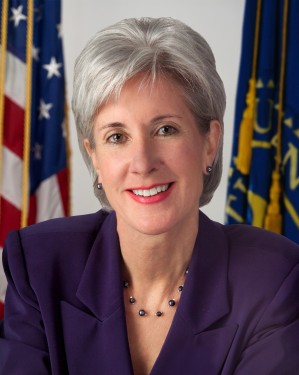
Remarks as prepared for delivery by Secretary Sebelius on June 27th, 2011, Washington, DC.

Thank you, Mark, for that kind introduction.  Few people have done as much to improve America’s health and health care as Mark has over the last decade.  Every day, we build on the foundation he left at CMS.  And I’m especially grateful to Mark and Brookings for their work on Accountable Care Organizations – a concept they helped invent and have done as much as anyone to develop and promote.

I also want to thank everyone who’s here today, especially the hospital and physician leaders.  Having all of you here in this room is a powerful sign of how committed America’s health care providers are to improving care.

Finally, I want to acknowledge all those from the Health IT conference next door who are here for the opening session.  It’s fitting that we’re here together this morning because electronic health records can play a key role in almost everything Accountable Care Organizations hope to accomplish, from measuring and improving quality to helping providers work together more effectively.

We’re gathered this morning at a time when two trends are converging.  On the one hand, there is new urgency about rising health care costs.

It’s coming from working families who have had to give up raises in order to avoid health insurance cuts.  It’s coming from small businesses that have had to choose between offering health coverage to their current employees and adding new ones.  It’s coming from states where rising costs in Medicaid are crowding out investments in better schools and new roads.  And it’s coming from Medicare where the program’s trustees recently found that, even with Affordable Care Act reforms that added eight years to the life of the trust fund, it is still on pace to become insolvent in 2024.

At the same time, we have a growing understanding of how to bring down costs by improving care.  A recent study found that as many as one in three hospital patients are harmed by their care.  But I’ve visited innovative hospitals across the country that are showing that much better results are possible.  At Seton Medical System in Austin, they told me how they had reduced emergency room visits by a third and hospital stays by two thirds for a group of patients with asthma by providing better preventive care.  At Henry Ford Health System in Detroit, they told me how they had cut major categories of harms by 25 percent by improving communication between providers.  I’ve seen similar results everywhere from Norfolk to Denver to San Francisco.

Improving care is clearly the best approach to addressing rising costs – especially compared to recent proposals that would simply cut Medicare and Medicaid, without doing anything to address underlying growth in health care spending.  But it’s also clear that we are not improving fast enough.  So our challenge is to speed it up.

To do that, we need to change one of the unique facts about health care, which is that it’s a field in which innovators are actually punished financially.  In a system where empty beds don’t generate revenue, a hospital that provides excellent follow-up care to keep a patient from being readmitted may actually lose money.  In a system that primarily rewards procedures, there’s little reward for a physician practice that invests its time in helping its patients manage their diabetes.  This doesn’t make sense, and that’s where the Affordable Care Act comes in

This is a law that has three simple goals: better care, better health, and lower costs.  It achieves these goals in a variety of ways from strengthening our health insurance market to investing in prevention.  But it also contains more than 80 tools to help providers reinvent health care to make it more effective and affordable.  One of those exciting tools is Accountable Care Organizations.

The idea behind these organizations is very powerful.  By giving hospitals and physician’s groups a share of the savings when they reduce costs by improving care, we can start to reward innovation just like other fields do.  All of a sudden, there is a clear financial incentive to prioritize primary care and prevention.  Innovative programs for providing follow-up care to discharged patients and helping people manage their chronic conditions are no longer money-losing luxuries.  Patients can feel like they have active partners in getting and staying healthy, while still being able to see any doctor they choose.

Many of you know this already.  But I repeat it now because I hope that as you have your discussions today, you will keep in mind both of the powerful urgency behind change and the enormous possibilities of a health care system in which payers, doctors, and patients all benefit when health improves.

As you know, our department issued proposed rules to guide the creation of Accountable Care Organizations at the end of March.  These rules were carefully written by our staff, led by Dr. Don Berwick who many of you know as our nation’s leading expert on health care improvement.  He is the right leader in the right place at the right time, and in writing these proposed rules, he and his team carefully weighed the interests of hospitals, doctors, patients, and other stakeholders – but the emphasis here is on the word “proposed.”  These rules were a first draft, and even as we were writing them, we were looking forward to receiving comments that we knew would make these rules even stronger.

Altogether, we received more than 1,200 comments on everything from… (read complete speech here).

ACO Summit AM Roundup

We always feel a tad behind the power curve here on the West coast when events begin in the ‘ET’ AM zone circa, in Todd Park’s vernacular, ‘…..at 0 dark hundred.’

Such is the case for the 2nd National ACO Summit which has convened in Washington DC today with many of the names we’ve come to associate with leadership (both thought and on the ground) in the ‘accountable care’ conversation with our without the ‘O’.

See the complete agenda here.

For a hashtag summary courtesy of our friends at the Fox Group, see the recap and Twitter scroller, here.

And the emerging ‘digital footprint’ can be view here.

We’ll stay on top of notable quotes and key themes as they unfold.

Meanwhile my key take away from the AM session is summarized by the following quote from Steve Hester, MD, MBA
Senior Vice President and Chief Medical Officer, Norton Healthcare, Louisville, KY:

‘Change is coming whether we all like it or not..’